
Your bedroom is fine, but you always feel like it’s missing something, that cozy feeling that you’re supposed to get when you come back home or when you’re about to sleep.
A cozy bedroom is not about trends or perfection. It is about creating a space that helps your body slow down and your mind switch off.
With a few thoughtful choices, your bedroom can become a place where sleep comes easier and mornings feel better. Here are some ideas for you.
1. Soft Neutral Color Palette That Signals Rest

Soft, muted colors instantly tell your brain that it is time to relax. Shades like warm beige, light taupe, soft grey, and creamy white help reduce visual stress, especially after a long day.
I have found that neutral walls create a gentle backdrop that never feels busy. They allow the room to feel calmer, even when life outside feels loud. The key is choosing tones with warmth rather than stark brightness.
If you want subtle depth without distraction, layer similar shades instead of adding contrast. This keeps the room soothing and visually quiet, which supports deeper rest at night.
2. Layered Bedding That Feels Inviting, Not Heavy

Layered bedding creates that hotel-like comfort we all love, but it works best when it feels breathable rather than bulky. Light layers let you adjust warmth without feeling trapped.
Focus on a balance of comfort and airflow. This approach makes the bed feel welcoming while supporting better sleep quality through the night.
Helpful layering ideas include:
- A breathable fitted sheet
- A lightweight duvet or comforter
- One soft throw folded at the foot
- Two to four pillows with different firmness levels
3. Warm Lighting That Supports Evening Wind-Down

Lighting has a powerful effect on sleep, especially in the evening. Bright white light can keep your brain alert, while warm lighting helps signal that it is time to rest.
Switching to warm bulbs made a noticeable difference for me. The room felt calmer, and my evenings naturally slowed down. Soft lamps feel far gentler than harsh overhead lighting.
Try using table lamps or wall sconces instead of ceiling lights at night. This creates a softer glow that encourages relaxation and better sleep habits.
4. Minimal Bedside Styling That Reduces Visual Noise
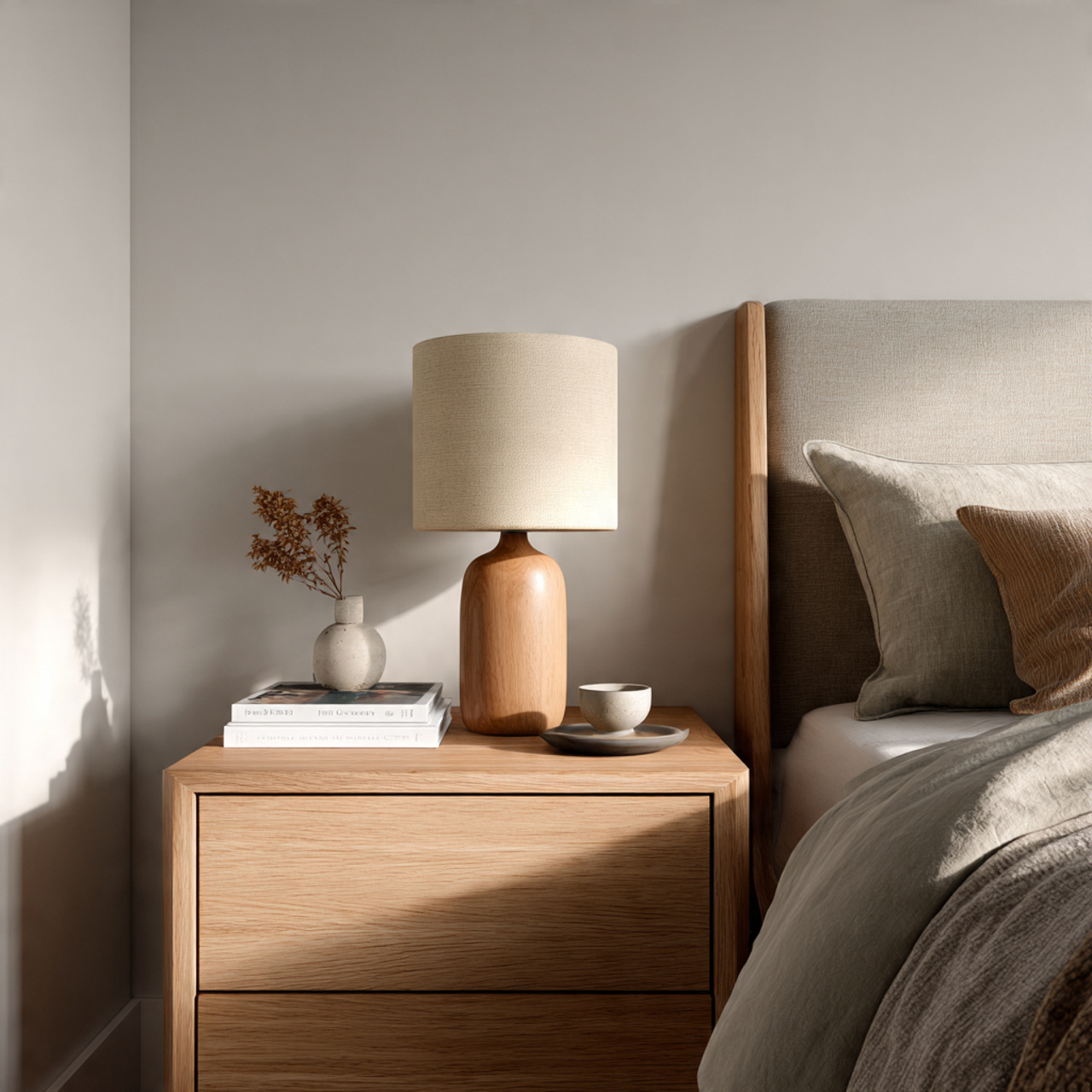
Your bedside area should feel peaceful, not crowded. Too many objects can subconsciously keep your mind active when you are trying to rest.
I noticed I slept better once I cleared unnecessary items from my nightstand. A simple surface feels easier on the eyes and the mind, especially before sleep.
Keep only what you truly need nearby. A lamp, a book, and perhaps a small dish for essentials are often more than enough to maintain calm.
5. Comfortable Mattress Setup with Breathable Layers
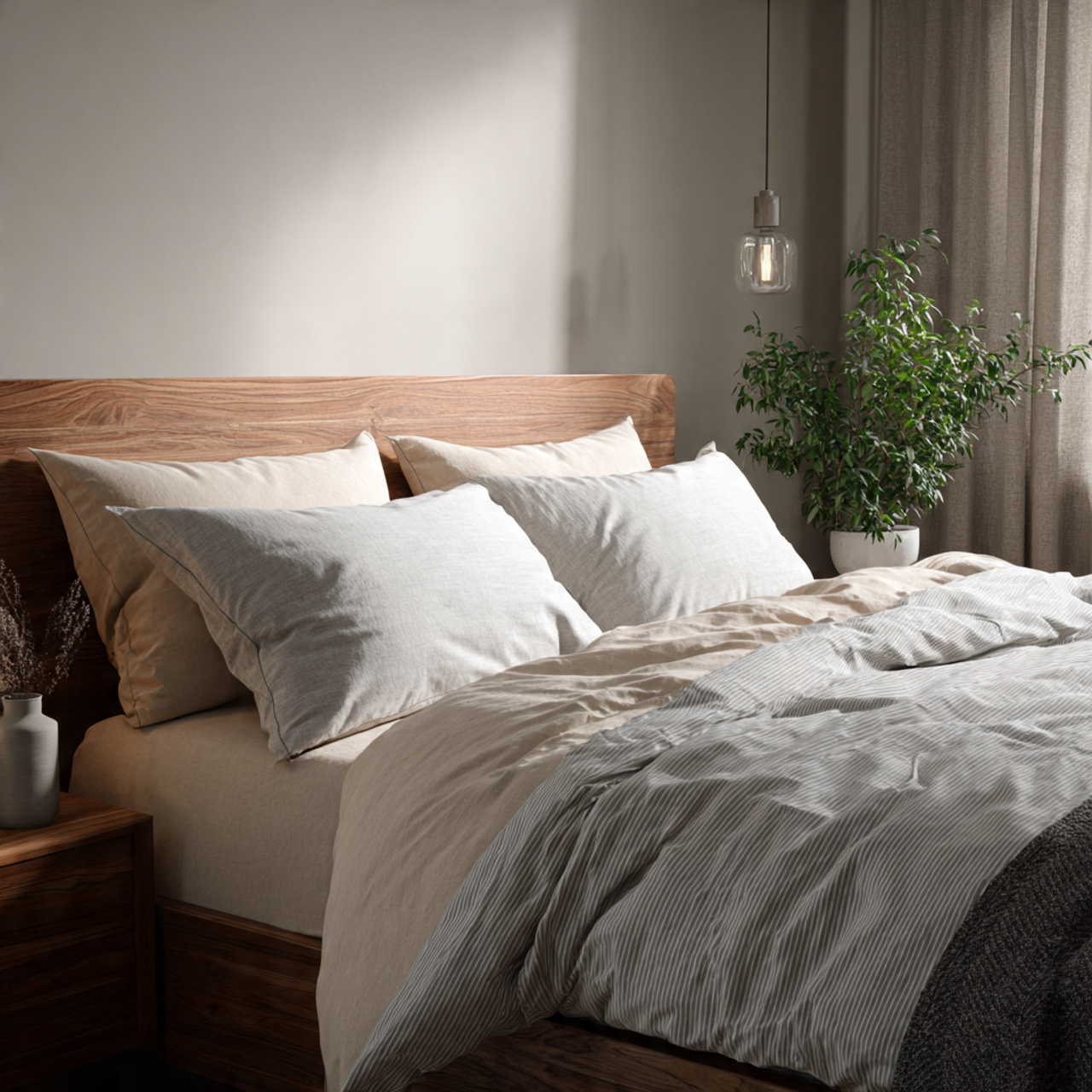
No amount of decor can fix poor sleep if your mattress setup is uncomfortable. Comfort and support matter more than style when it comes to rest.
A breathable mattress topper or mattress protector can improve temperature regulation. This helps prevent overheating, which is one of the biggest sleep disruptors.
Pay attention to how your bed feels throughout the night, not just when you lie down. Small upgrades can make a big difference over time.
6. Curtains and Blinds That Block Light Gently

Light exposure affects sleep more than we realize. Even small amounts of light can interrupt deep rest, especially in the early morning hours.
Blackout curtains are helpful, but they do not have to feel heavy. Choose soft, lined curtains that block light while still feeling cozy and inviting.
Layering sheer curtains with blackout panels gives you flexibility. You can enjoy natural light during the day and complete darkness at night.
7. Cozy Rugs That Add Warmth Underfoot
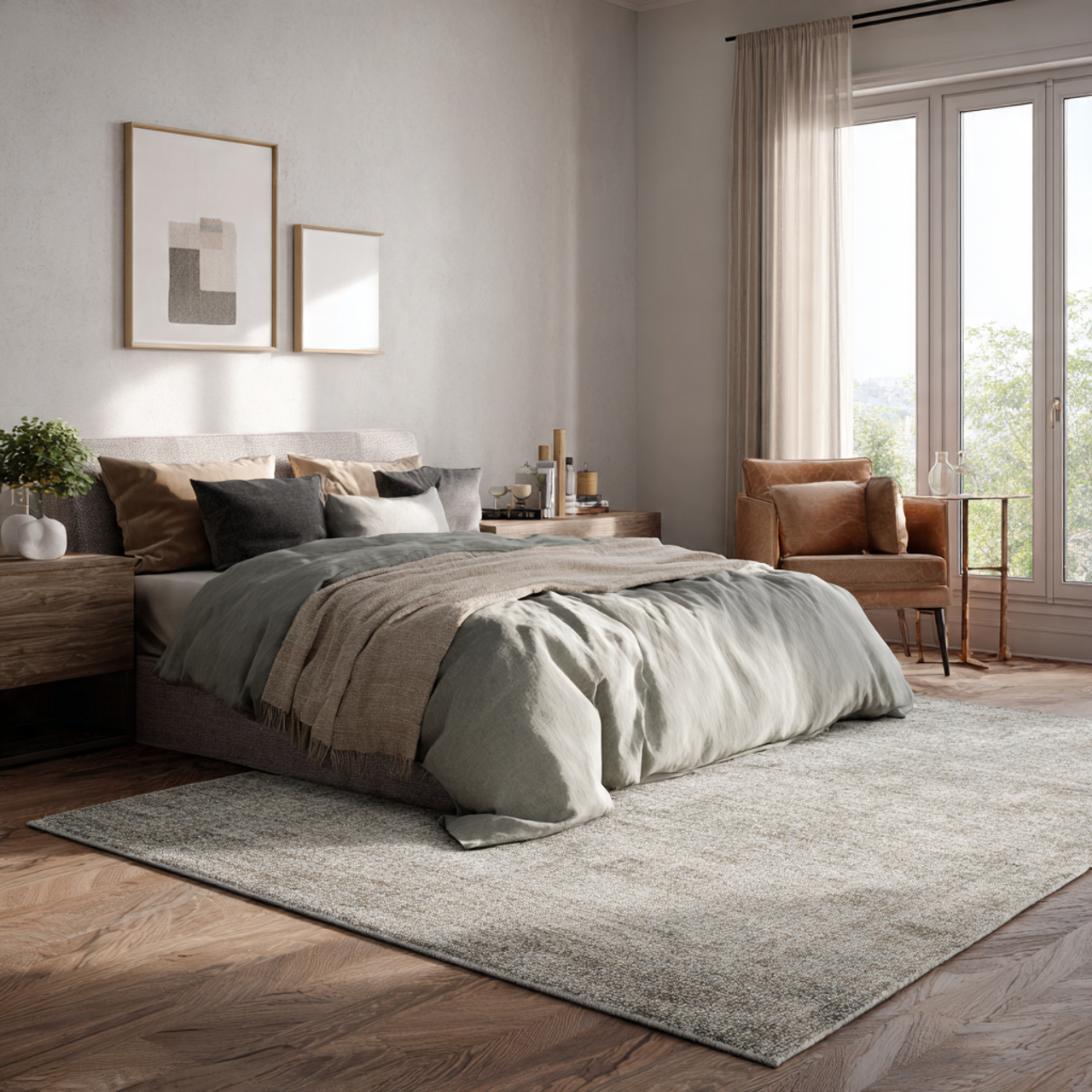
A soft rug can instantly make a bedroom feel warmer and more inviting. Stepping onto something plush in the morning feels far better than cold flooring.
Rugs also help absorb sound, which contributes to a quieter space. Less noise means fewer disturbances and deeper sleep.
Choose a rug with a low to medium pile for comfort without excess bulk. Neutral tones work best for maintaining a calm atmosphere.
8. Clutter-Free Layout That Encourages Mental Calm

Clutter creates visual stress, even if you do not consciously notice it. A clutter-free bedroom feels easier to relax in, especially at night.
I found that simply improving the layout made the room feel more peaceful. Clear walkways and open space allow the room to breathe.
Focus on keeping surfaces clear and furniture spaced comfortably. A calm layout supports a calm mind, which directly improves sleep quality.
9. Symmetrical Bed Setup That Feels Balanced and Safe

Symmetry creates a sense of order and stability, which can be surprisingly comforting. Matching nightstands or lamps help the room feel grounded.
This balance makes the space feel intentional rather than chaotic. I noticed that symmetrical setups naturally feel more relaxing and easier on the eyes.
You do not need perfect matching pieces. Similar shapes, heights, or tones are often enough to create harmony.
10. Soft Wall Treatments That Absorb Sound

Sound plays a major role in sleep quality. Hard surfaces can bounce noise around, making even small sounds feel louder at night.
Soft wall elements help reduce echo and create a quieter environment. This makes it easier to fall asleep and stay asleep.
Effective options include:
- Fabric headboards
- Upholstered wall panels
- Heavy curtains
- Tapestries or textile art
11. Personal Decor That Feels Comforting, Not Stimulating
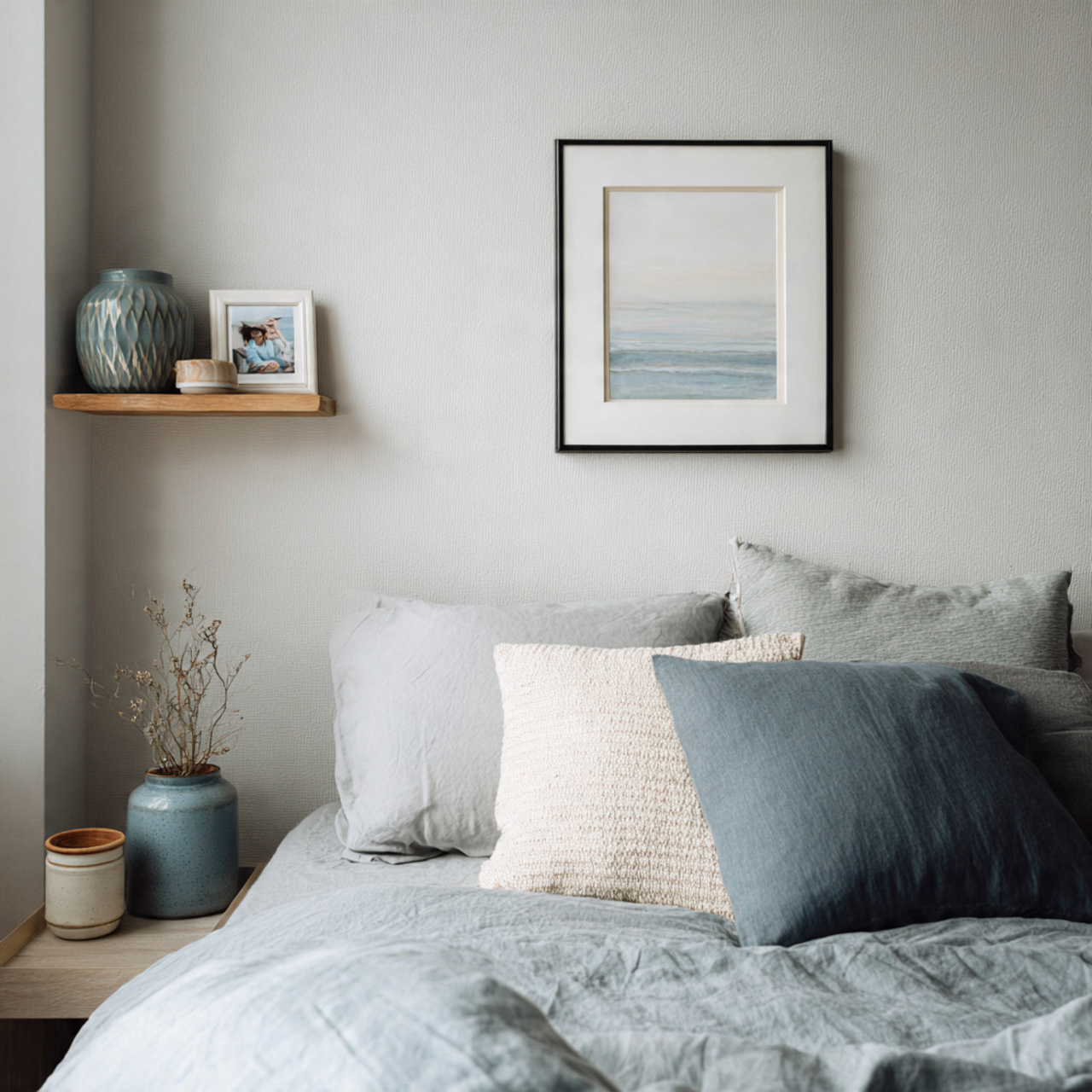
Personal touches matter, but they should feel soothing rather than energizing. Bold colors or busy patterns can make it harder to unwind.
Choose decor that brings a sense of comfort or familiarity. Photos, artwork, or objects with emotional meaning work best when kept minimal.
I prefer items that make me smile quietly rather than grab attention. This keeps the bedroom restful instead of mentally stimulating.
12. Gentle Scents That Promote Relaxation

Scent is closely linked to relaxation and sleep. Gentle, natural scents can help your body associate the bedroom with rest.
Lavender, chamomile, and sandalwood are popular for a reason. They promote calm without overwhelming the senses.
Use scent sparingly through candles, diffusers, or linen sprays. The goal is subtle comfort, not strong fragrance.
13. Bedroom Layout That Supports Easy Movement

A bedroom should feel easy to move through, especially at night. Tight spaces can create frustration and disrupt calm.
Make sure there is clear space around the bed and easy access to essentials. This reduces stress and supports a smoother nighttime routine.
Even small adjustments to furniture placement can make the room feel more relaxed and functional.
14. Cooling and Airflow Choices That Improve Sleep Comfort

Temperature plays a huge role in sleep quality. A room that feels too warm or too still can interrupt rest.
Good airflow helps regulate body temperature and improve comfort. Even small changes can make a difference.
Helpful airflow ideas include:
- Ceiling or floor fans
- Breathable bedding
- Slightly open windows when weather allows
- Lightweight curtains that allow air movement
15. Technology-Free Zones That Help the Mind Rest

Screens stimulate the brain, making it harder to relax before sleep. Creating boundaries with technology can greatly improve rest.
I noticed better sleep once I stopped using my phone in bed. The bedroom felt calmer and more intentional.
Try keeping screens out of arm’s reach or charging devices outside the bedroom. This small habit supports better sleep over time.
16. Simple Nighttime Routine Corner Near the Bed
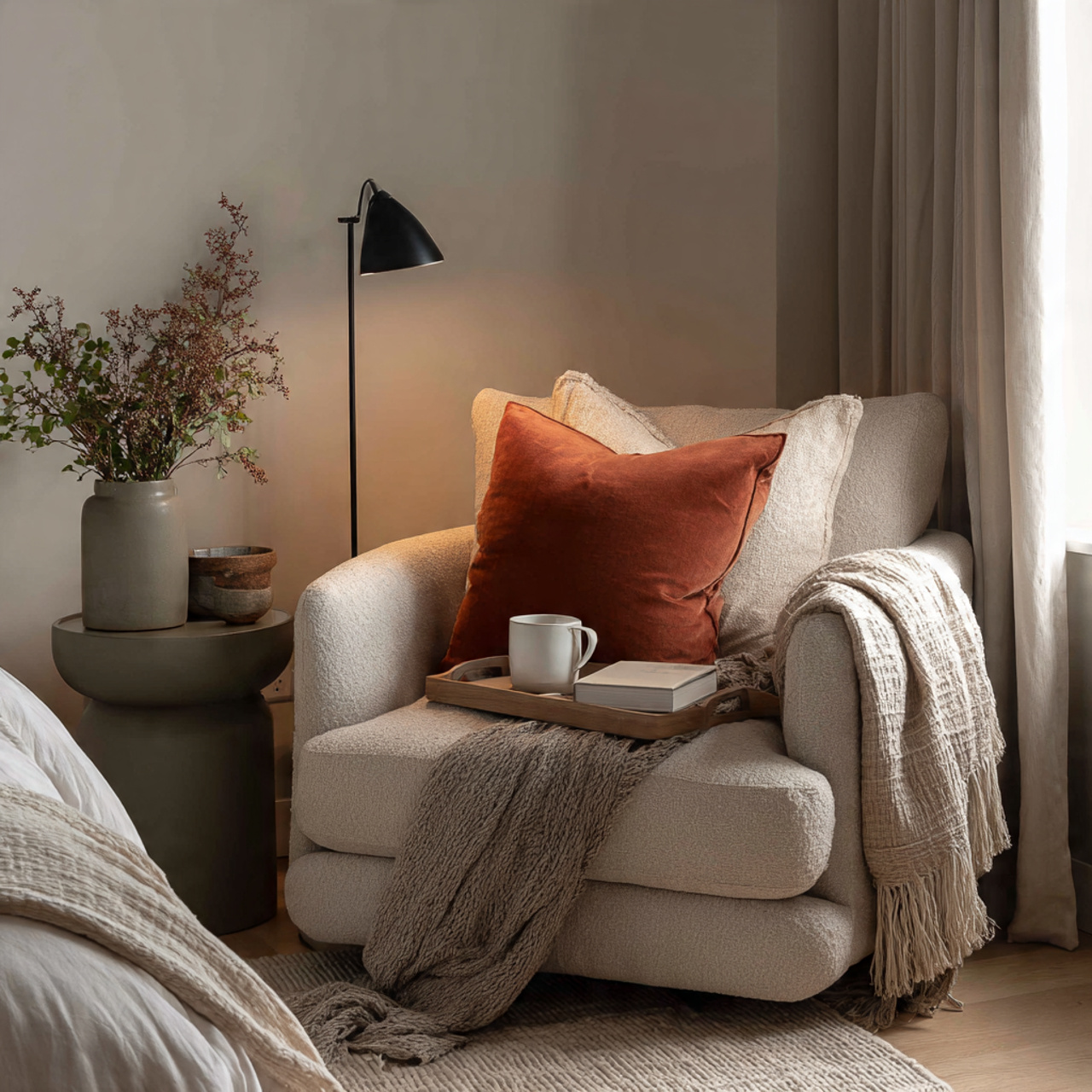
A small routine area can help signal bedtime to your brain. This could be as simple as a chair or bedside tray.
Use this space for calming habits like reading, journaling, or stretching. It helps your body associate the bedroom with rest.
Keeping this routine consistent can make falling asleep feel easier and more natural.
Conclusion
Creating a cozy bedroom that improves sleep quality is about thoughtful choices, not expensive upgrades. Soft colors, gentle lighting, comfortable textures, and calm layouts all work together to support better rest.
When your bedroom feels peaceful and personal, sleep becomes something your body welcomes. Over time, these small changes can lead to deeper rest, better mornings, and a healthier relationship with sleep itself.